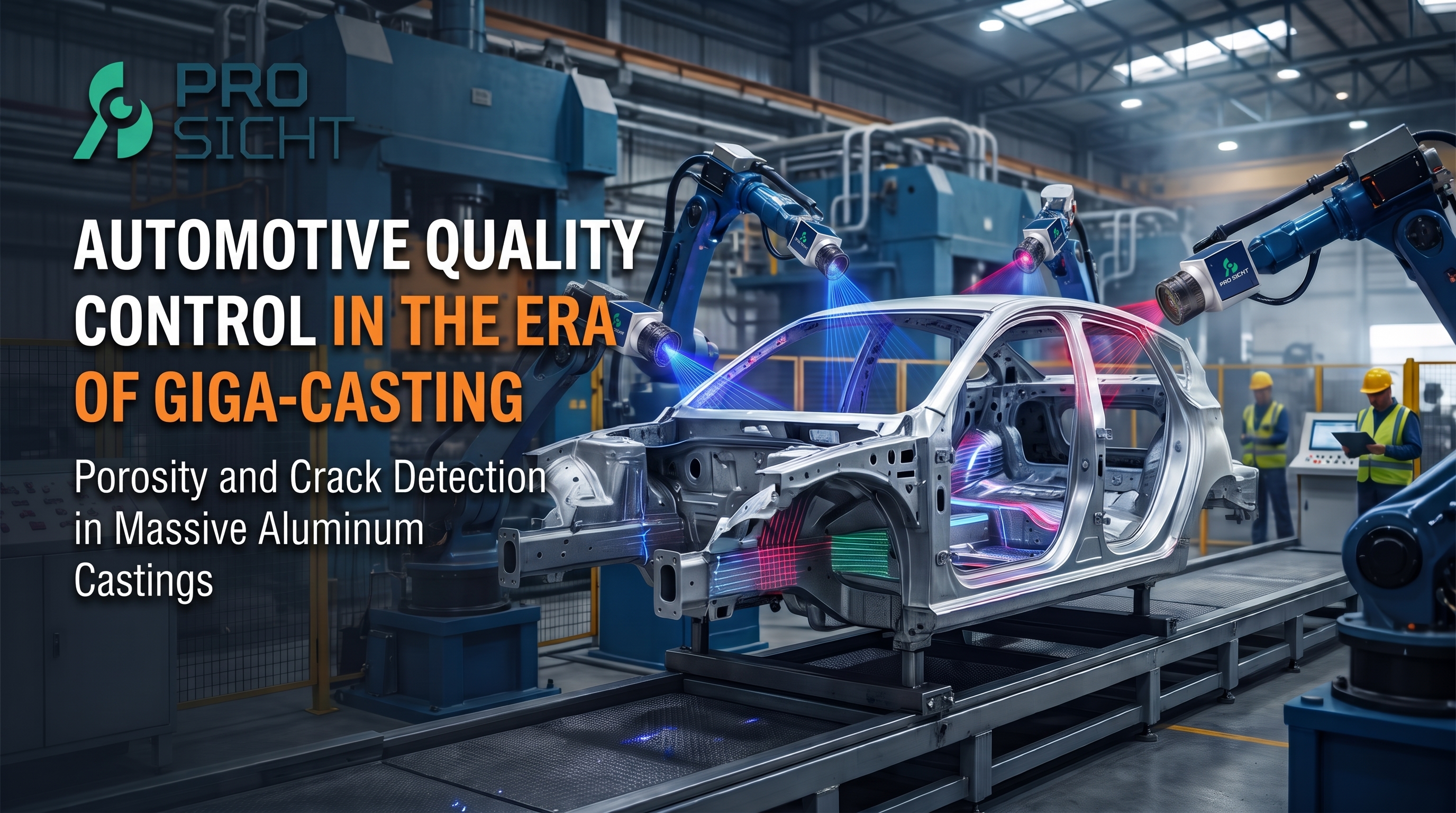

As tolerances reach micron levels in sheet metal processing lines across the automotive, white goods, and heavy industry sectors, quality control processes become increasingly challenging as production speeds rise. Microcracks, hairline scratches, and deformations occurring in sheet metal formed under high-tonnage presses within seconds or moving at high speeds are nearly impossible to detect with the naked eye or conventional inspection methods.
In particular, glossy and oily metal surfaces with variable light reflection can mislead conventional optical inspection systems, resulting in a high rate of false positives. At this point, Edge AI and deep learning-based image processing systems play a critical role in minimizing scrap rates by performing surface analysis within milliseconds.
The Limitations of Conventional Optical Sensors on Metal Surfaces with Variable Reflectivity
Traditional rule-based optical inspection systems operate using fixed pixel thresholds and predefined geometric algorithms. However, the following factors cause rule-based systems to struggle on high-speed sheet metal production lines:
Variable Reflection and Glare: Protective oil layers on sheet metal or glare caused by changes in lighting angles can be interpreted as surface defects by conventional software.
Complexity of Defect Types: Non-uniform microcracks, surface irregularities, or light scratches cannot be reliably identified using fixed pixel-based rules.
High Line Speeds: Latency caused by transferring data to and processing it on centralized servers makes real-time intervention impossible on sheet metal lines moving at dozens of meters per second.
These limitations can result either in defective parts passing through the inspection process (NG parts going undetected) or defect-free parts being incorrectly classified as defective (false alarms), leading to unnecessary downtime and increased scrap costs.
How Does Edge AI and Deep Learning-Based Surface Defect Detection Work?
Edge AI architecture enables artificial intelligence models to run directly on industrial edge devices (Edge Devices / GPUs) integrated into the production line, rather than on cloud platforms or remote servers.
Pro Sicht’s InspectAI and deep learning-based image processing infrastructure can be deployed on high-speed sheet metal lines through the following stages:
1. High-Speed Optical Imaging and Lighting Management
As the sheet metal passes through the conveyor or exits the press, surface data is captured using high-resolution Line-Scan or Area-Scan cameras combined with industrial lighting at specific wavelengths. Oil marks and glare are reduced through hardware- and software-based filtering techniques.
2. Millisecond-Level Deep Learning Analysis with Edge AI
Camera data is transferred directly to the Edge AI unit located at the production line. Trained CNN (Convolutional Neural Network) and Transformer-based deep learning models:
Distinguish natural light reflections and oil accumulations on the surface from actual defects.
Detect, classify, and localize hairline cracks, micro-tears, burrs, impact marks, and surface irregularities within milliseconds.
3. Real-Time Classification and Tolerance Management (OK / NG)
The model compares the size and severity of the detected micro-defect against predefined tolerance thresholds. If the defect falls outside the specified tolerance, the Edge AI processor sends a signal to the line’s pneumatic/robotic ejection systems or PLC with millisecond-level response time, allowing the defective part to be immediately removed from the production line.
Minimizing Scrap Costs and Predictive Quality Control
Edge AI-based surface inspection does more than simply identify and remove defective products; it adds value across the entire production process:
Reduced Scrap and Rework Costs: Detecting defective parts at an early stage prevents defective material from entering subsequent value-added processes such as forming, welding, and painting.
Early Detection of Tool and Equipment Wear: By monitoring trends in gradually increasing micro-burrs or scratches on the surface, wear in press dies can be detected at an early stage. This helps prevent unplanned downtime.
Zero-Defect Shipment: Potential quality issues that could occur at the customer’s facility can be identified before shipment, helping eliminate compensation risks and supplier score losses.
Conclusion
Increasing quality tolerances and rising production speeds in the automotive and metal processing industries are making conventional inspection methods increasingly inadequate. Edge AI-powered artificial intelligence and image processing solutions integrated into high-speed sheet metal production lines provide micron-level precision, even on complex metallic surfaces.